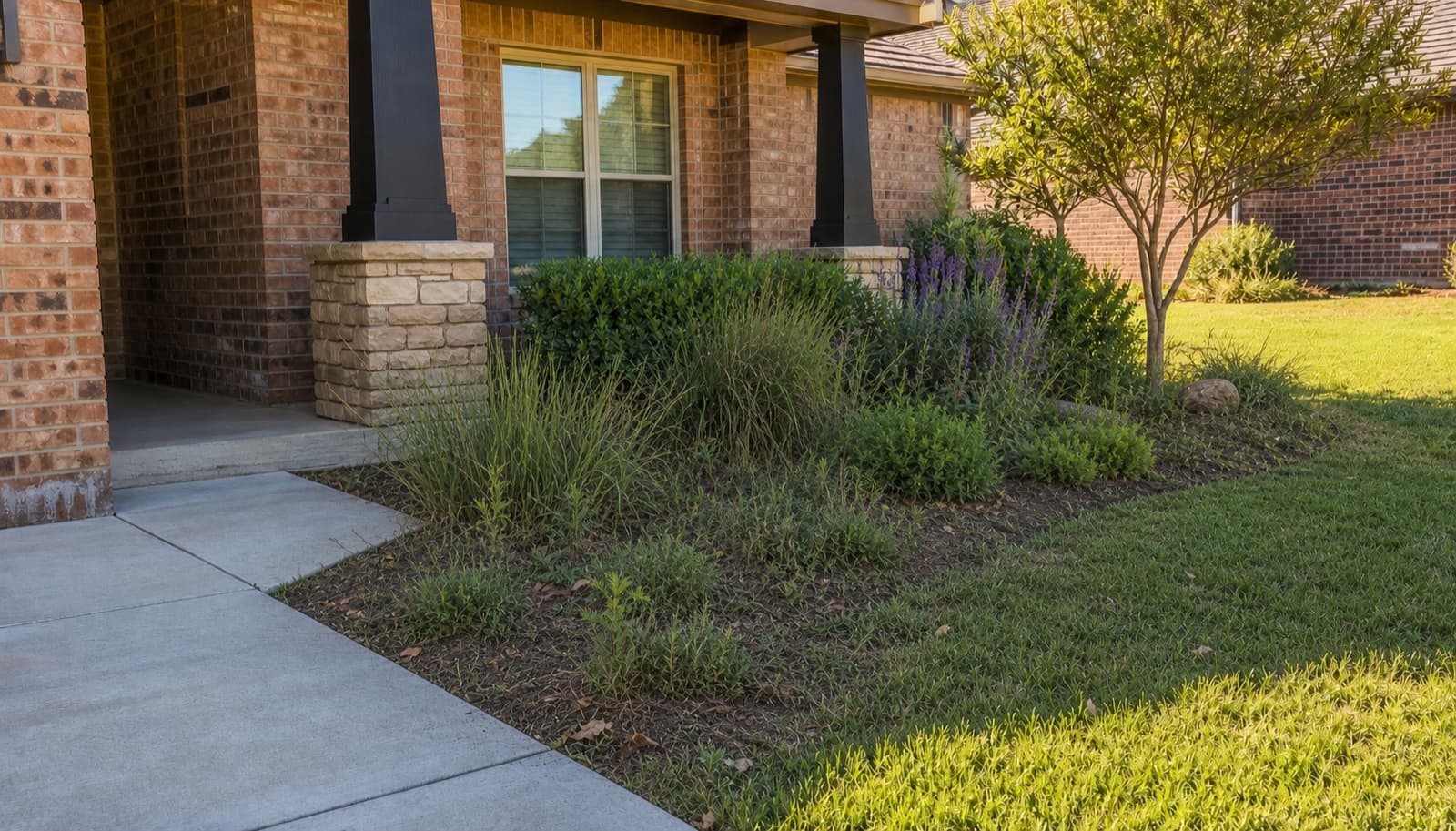

A water-wise bed can still have color, texture, and a polished look. The difference is that plant choice, soil coverage, and irrigation are planned around northwest Oklahoma's variable rainfall instead of fighting it.
Start with the site's real conditions
Track sun, reflected heat, drainage, and wind exposure. A plant that succeeds on the east side of a house may struggle beside a west-facing brick wall. Match the plant to the spot before changing the watering schedule.
Group plants with similar needs
Hydrozoning keeps drought-tolerant plants from being overwatered just to support a thirstier neighbor. It also makes drip lines and hand watering easier to manage.
Cover and protect the soil
Mulch slows evaporation, reduces erosion, and limits weed competition. Keep an even layer, leave room around stems and trunks, and replenish only where the material has broken down or washed away.
Quick checklist
Put these tips to work.
- ✓Water early in the morning.
- ✓Use drip or soaker delivery where practical.
- ✓Repair leaks and misaligned emitters.
- ✓Choose plants for mature size to avoid constant pruning.
How CLM can help
Local work with a clear finish.
Combs Land Management can reset Woodward beds for more efficient care with cleanup, weed removal, defined edges, practical mulch depth, and a simpler plant layout.
Get a Free QuoteCommon questions
Good to know.
Are drought-tolerant plants maintenance free?
No. They still need establishment water, occasional cleanup, and site-appropriate care, but they can reduce ongoing water demand.
Does mulch save water?
Yes. OSU Extension notes that mulch can reduce soil moisture loss, moderate temperature, and suppress weed competition.
For additional research-based Oklahoma guidance, visit Oklahoma State University Extension: Water-Wise Landscape Principles.