
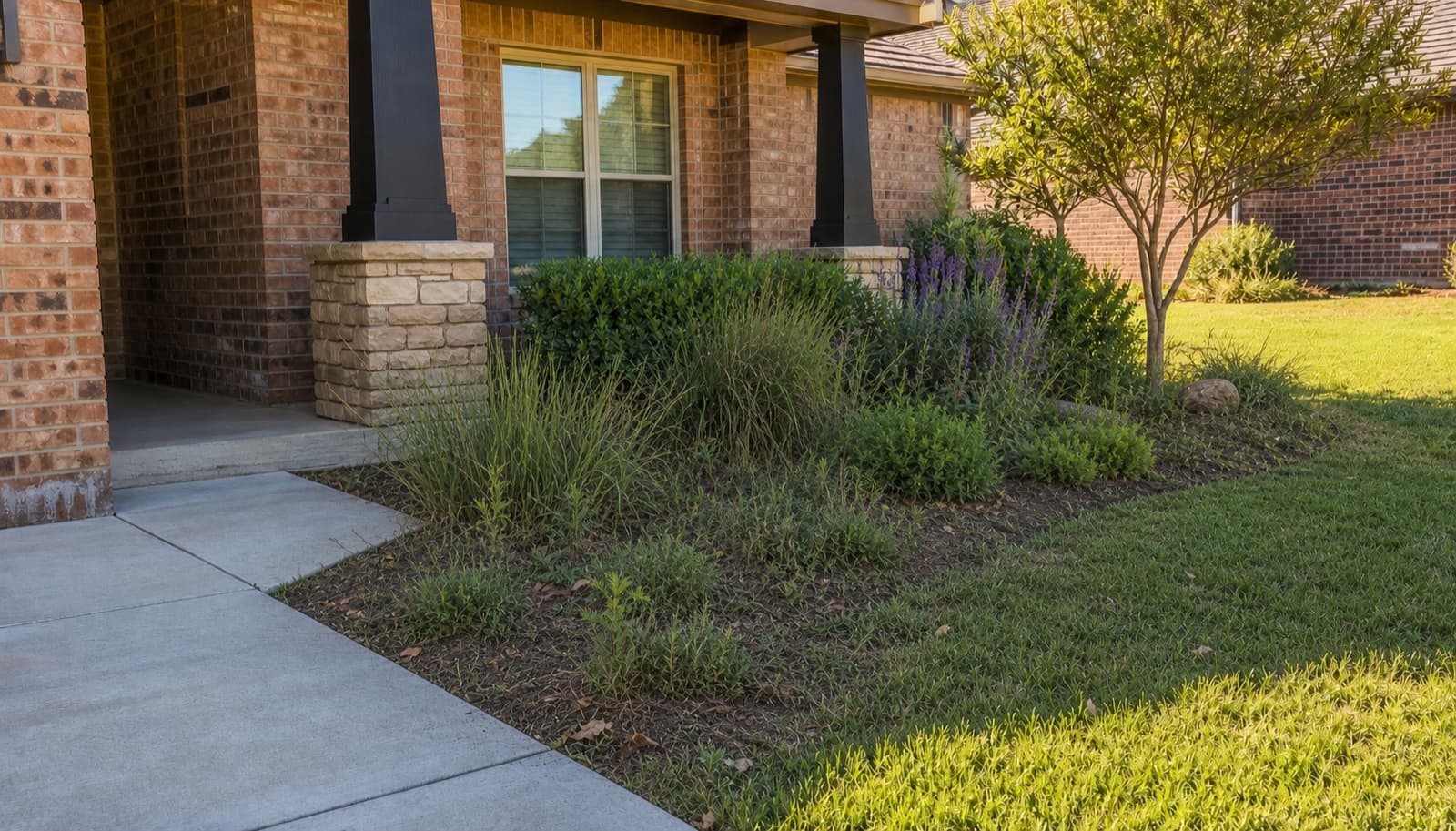
Spring beds often look worse than they really are. Dead annual growth, windblown leaves, faded mulch, and blurred edges can hide healthy perennials and shrubs. A deliberate reset restores structure before planting anything new.
Clean before you plant
Remove trash, sticks, dead annual material, and weeds. Cut back plants only when it is appropriate for that species and season. Cleaning first prevents new plants from being installed into a bed that still has drainage or weed problems.
Restore the shape of the bed
Follow the home's architecture and the existing landscape line. Redefine edges with smooth curves or straight runs instead of adding random pockets. A strong bed shape has more visual impact than filling every open spot.
Finish with mulch and water
After planting and cleanup, apply an even mulch layer without burying crowns or piling around trunks. Water new plants thoroughly and confirm that irrigation reaches the full root zone.
Quick checklist
Put these tips to work.
- ✓Mark perennials before aggressive cleanup.
- ✓Remove weeds before they set seed.
- ✓Check irrigation while the bed is open.
- ✓Choose a limited plant palette for a cleaner design.
How CLM can help
Local work with a clear finish.
Combs Land Management gives Woodward beds a complete spring reset, including weed removal, reshaped edges, mulch, light shrub cleanup, and seasonal planting where appropriate.
Get a Free QuoteCommon questions
Good to know.
Should mulch go down before planting?
It is usually easier to complete planting and soil work first, then apply mulch around the finished layout.
How do I keep the bed looking clean longer?
A defined edge, adequate mulch, timely weed removal, and plants matched to the site make the biggest difference.
For additional research-based Oklahoma guidance, visit Oklahoma State University Extension: All You Need To Know About Mulch.