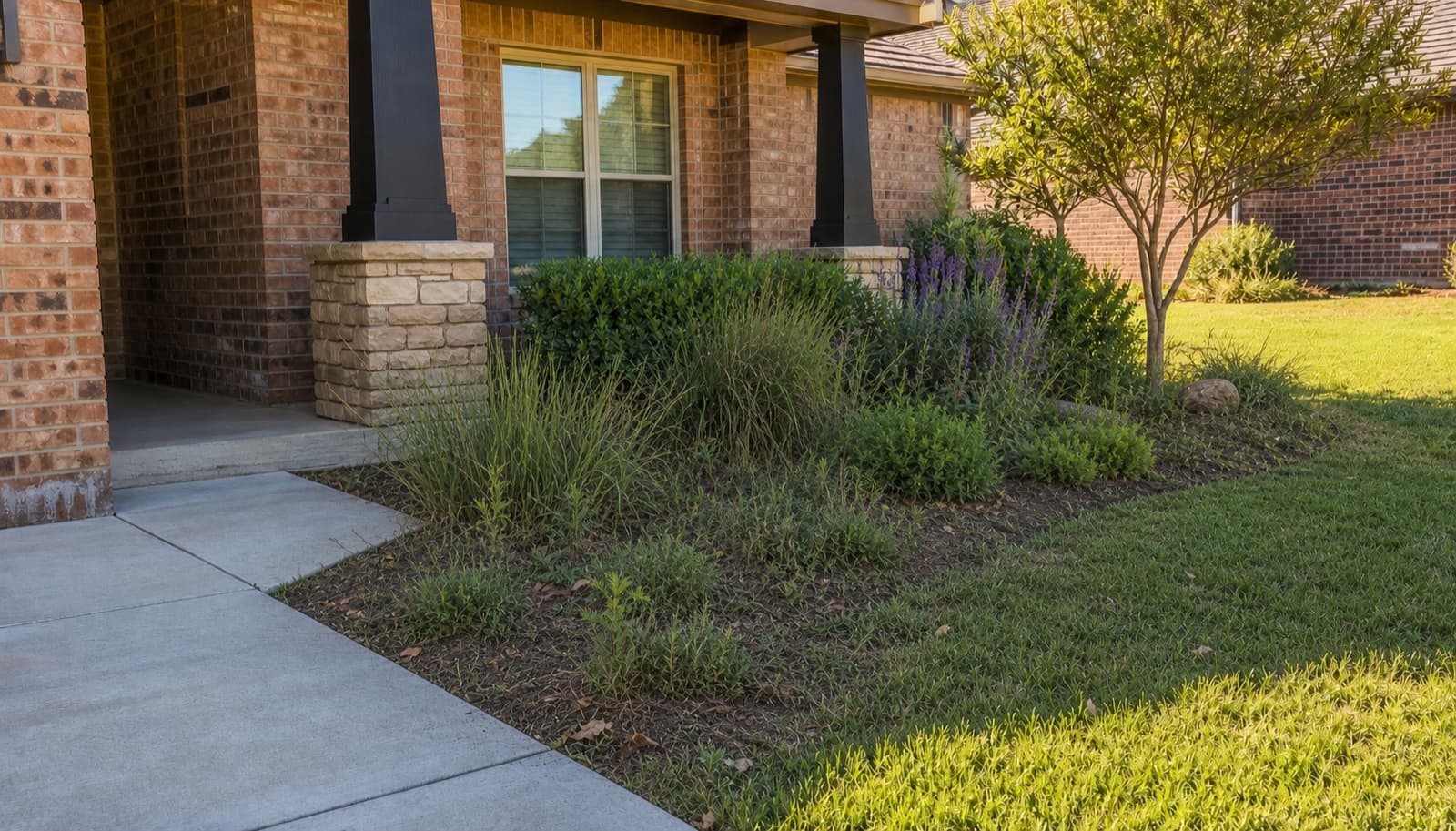
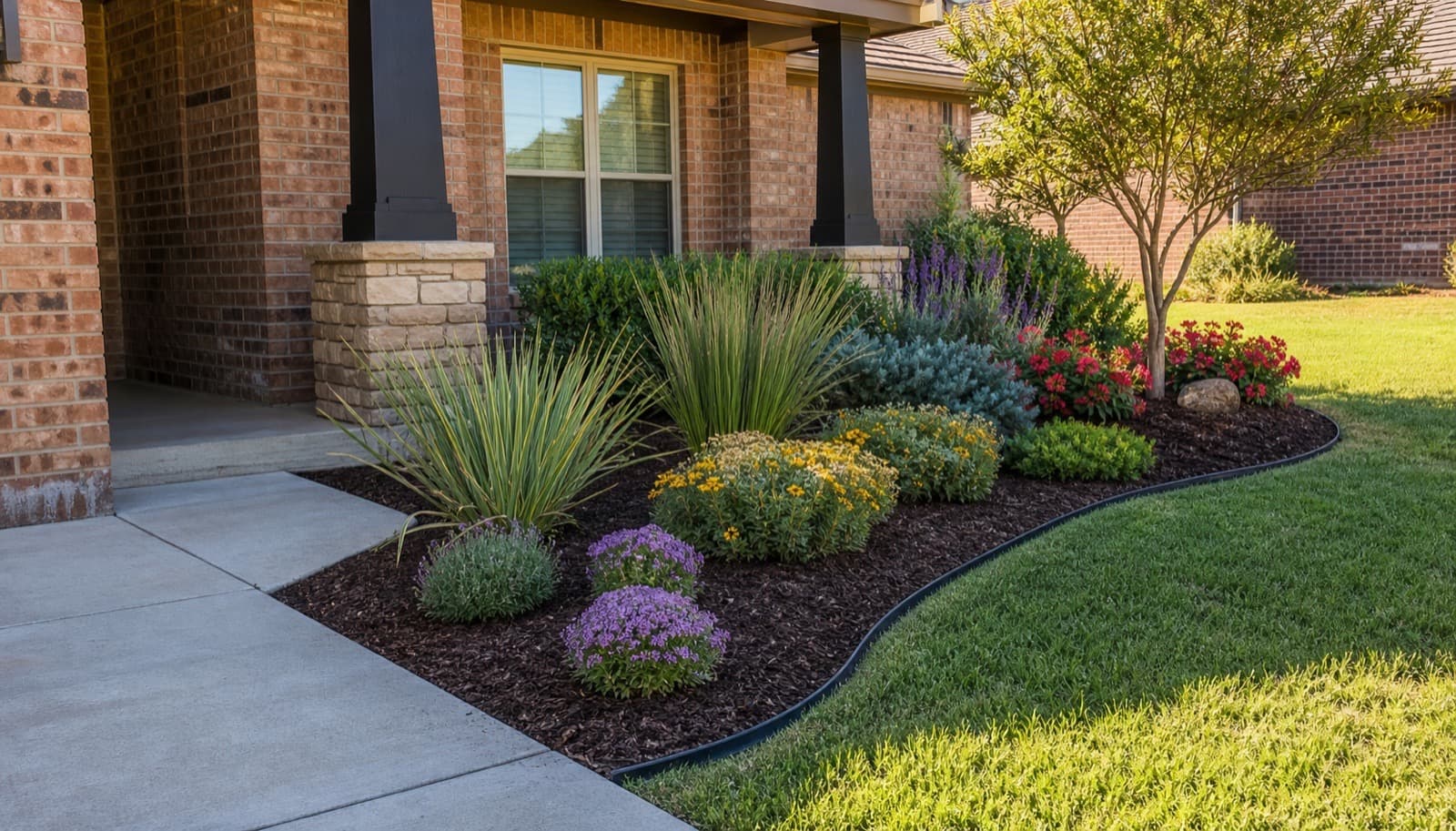
Low maintenance does not mean no maintenance. It means designing the property so routine work is predictable, access is easy, and every part of the landscape has a clear purpose.
Use turf where it is useful
Keep lawn in areas used for play, circulation, curb appeal, or erosion control. Narrow strips, steep corners, and spaces blocked by equipment may be better handled with beds, groundcover, or a different surface.
Group plants by water and sun needs
Plants with similar needs are easier to water correctly. Put sun-loving, drought-tolerant plants together and reserve higher-water selections for practical, visible zones where irrigation can reach them efficiently.
Design for the mower and the person maintaining it
Wide curves, accessible bed edges, clear gates, and enough room around obstacles reduce trimming time. Avoid tiny turf pockets and shapes that require constant hand work.
Quick checklist
Put these tips to work.
- ✓Limit the number of bed shapes.
- ✓Repeat a small group of reliable plants.
- ✓Use mulch to reduce bare soil and weeds.
- ✓Leave equipment access to every maintained area.
How CLM can help
Local work with a clear finish.
Combs Land Management helps Woodward homeowners simplify overgrown or fussy landscapes. Cleanup, new edges, mulch, selective clearing, and a practical mowing plan can dramatically reduce weekly work.
Get a Free QuoteCommon questions
Good to know.
Does low maintenance mean removing all lawn?
No. Functional turf can be valuable. The goal is to keep it where it serves a purpose and is practical to maintain.
What is the fastest visual improvement?
Cleaning bed edges, removing weeds, simplifying clutter, and refreshing mulch usually create an immediate change.
For additional research-based Oklahoma guidance, visit Oklahoma State University Extension: Water-Wise Landscape Principles.