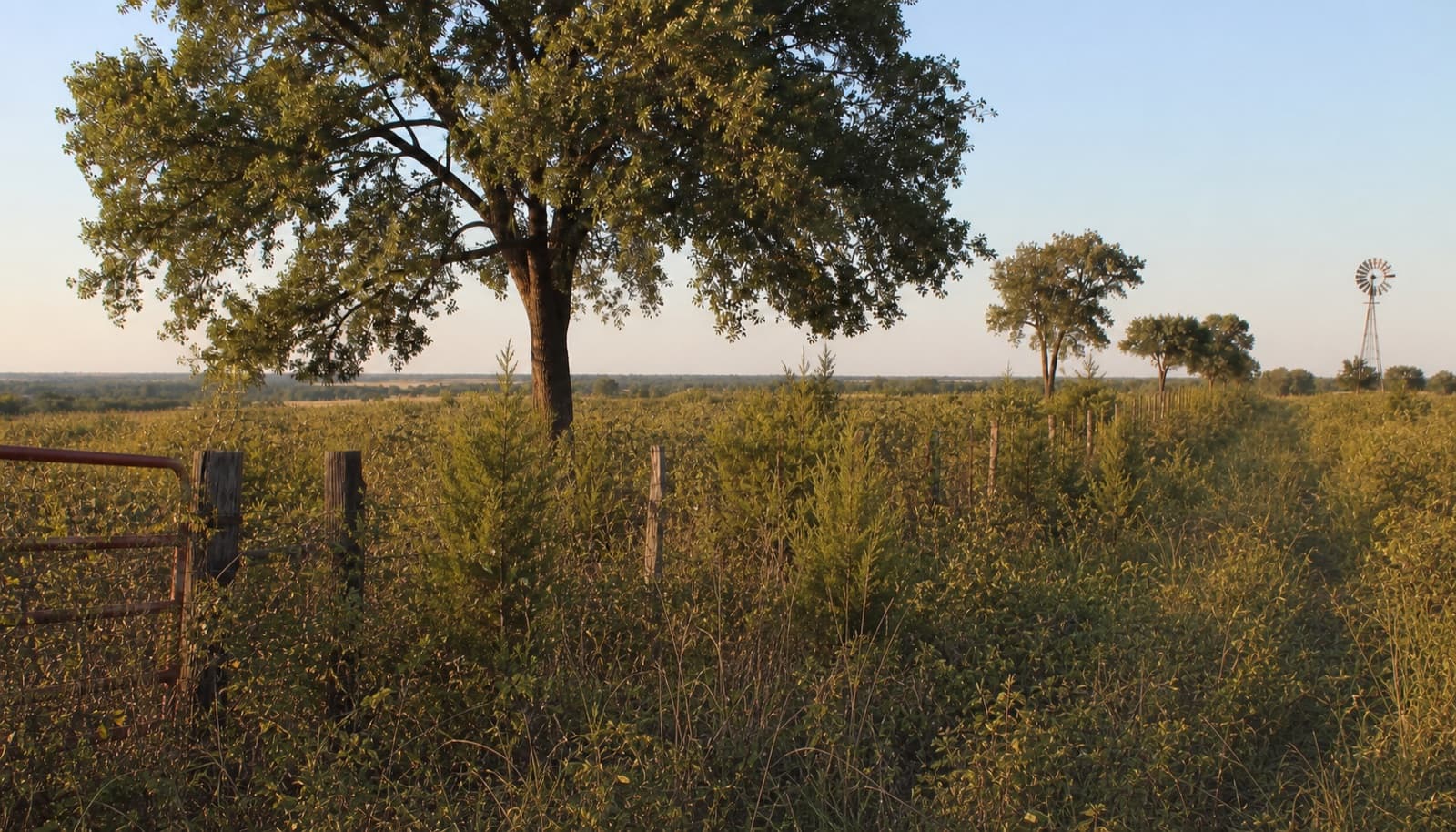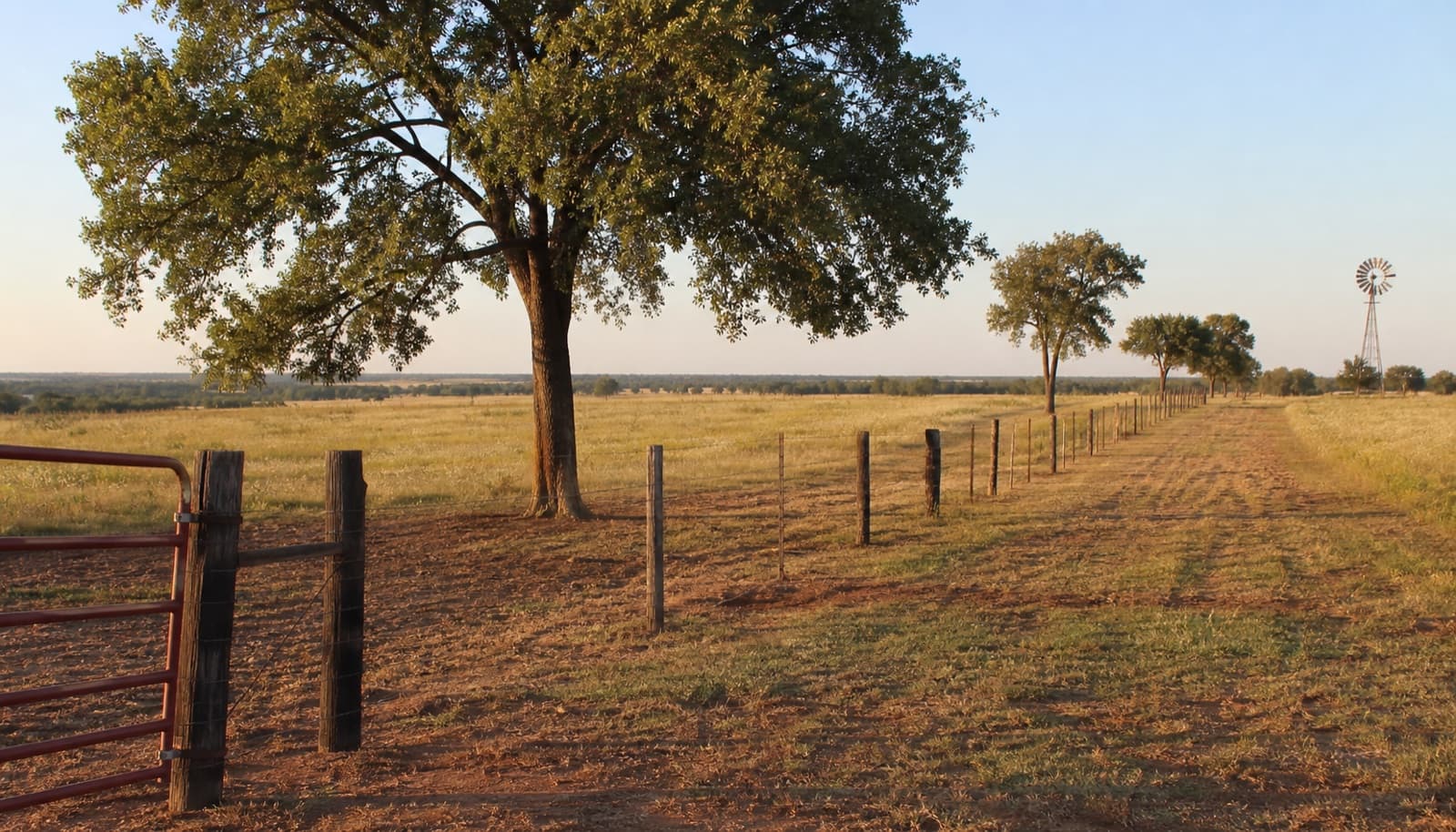

Acreage becomes expensive when every task is delayed until access is lost. A simple schedule keeps gates, drives, fence lines, buildings, and high-use areas open while allowing lower-priority ground to follow a less intensive plan.
Divide the property into zones
Separate entrances, homesites, barns, fence corridors, utility routes, drainage, and remote acreage. Each zone can have a different mowing or inspection frequency based on risk and use.
Inspect after major weather
Wind, ice, and heavy rain can block access, damage fences, and move debris into drainage paths. A quick post-storm inspection prevents small access problems from becoming larger ones.
Control woody growth early
Monitor eastern redcedar, volunteer trees, and brush along fences and open ground. Early removal is easier than reclaiming a dense stand later. Keep a photo record of repeat problem areas.
Quick checklist
Put these tips to work.
- ✓Keep gates and addresses visible.
- ✓Maintain equipment access around structures.
- ✓Inspect fence corners seasonally.
- ✓Schedule cedar and brush checks before growth becomes dense.
How CLM can help
Local work with a clear finish.
Combs Land Management works with Woodward acreage owners to combine mowing, cleanup, fence-line clearing, brush removal, and hauling into a realistic property schedule.
Get a Free QuoteCommon questions
Good to know.
Does every acre need the same maintenance?
No. Priority zones can receive frequent care while remote or low-use areas follow a seasonal plan.
How often should fence lines be checked?
Inspect at least seasonally and after significant weather, with more frequent checks where growth or livestock pressure is high.
For additional research-based Oklahoma guidance, visit Oklahoma State University Extension: Eastern Redcedar Control and Management.