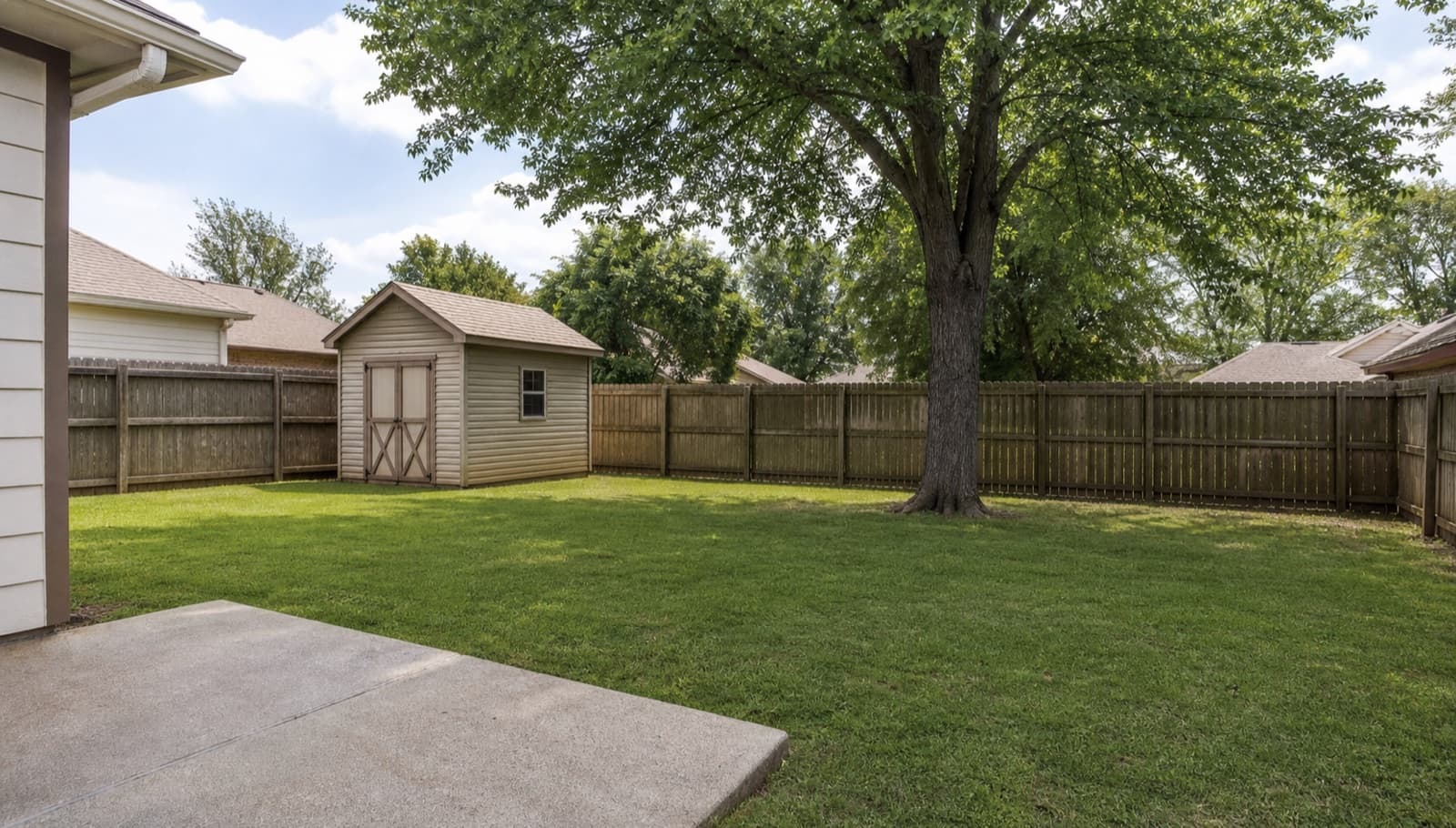
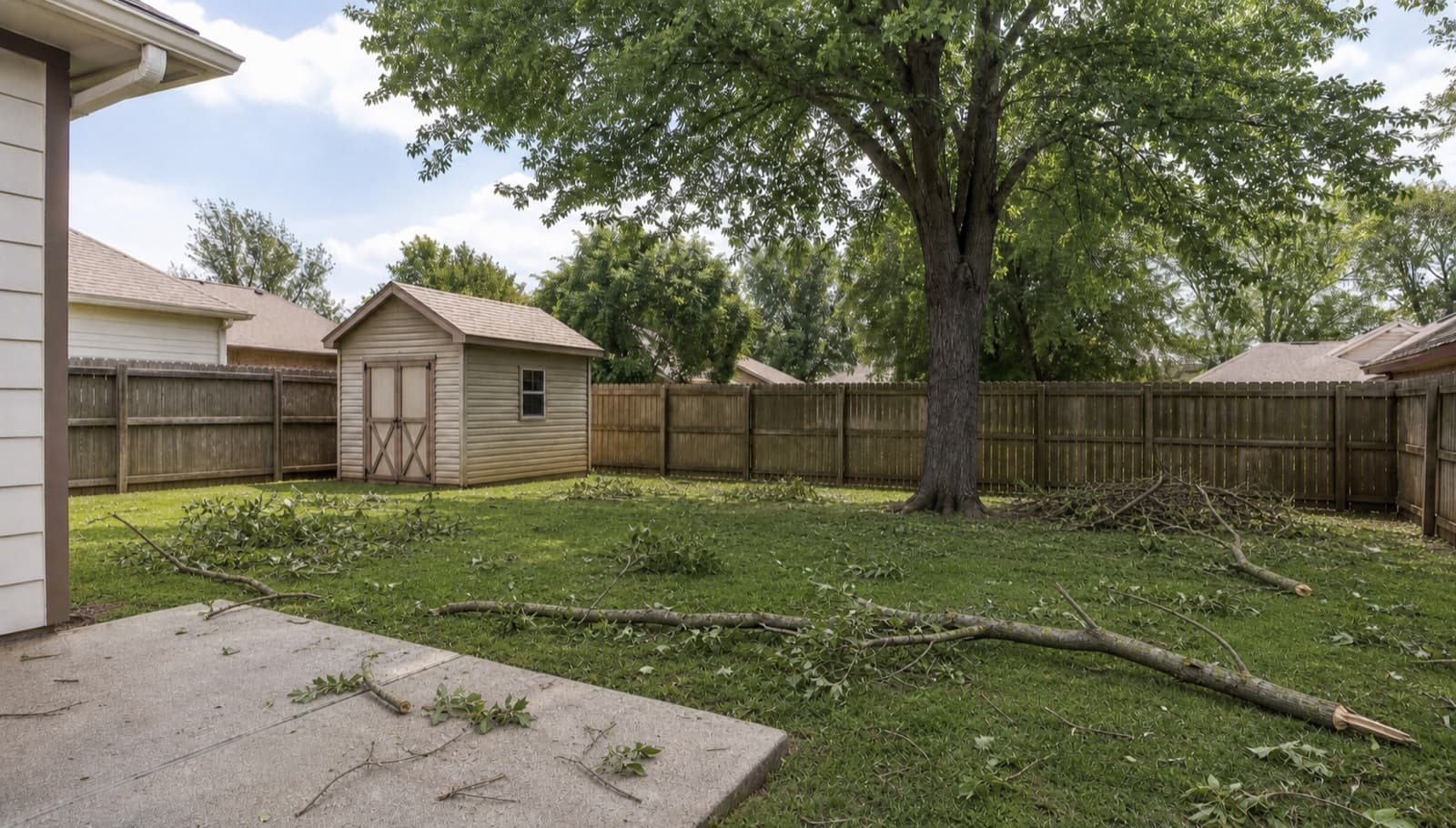
Oklahoma storms can leave a property looking like a simple pile of branches when the real risk is overhead. Before cutting or dragging anything, slow down and identify power lines, hanging limbs, split trunks, blocked access, and unstable material.
Look up before looking down
Broken limbs can remain lodged in a canopy after the storm passes. Stay out from under hanging material and keep people away from the drop zone. If a limb is near a power line, treat the area as dangerous and contact the utility.
Separate cleanup from tree work
Ground debris that is clear of hazards may be manageable. Hung limbs, heavy trunks, tensioned branches, and damaged trees require different equipment and judgment. Do not assume a chainsaw makes every situation safe.
Keep emergency access open
Prioritize drives, gates, sidewalks, and routes used by residents or responders. Stack material only where it will not block visibility, drainage, or equipment access, and arrange hauling before the pile spreads again.
Quick checklist
Put these tips to work.
- ✓Photograph the property before moving major debris.
- ✓Wear eye, hand, foot, and hearing protection.
- ✓Never work near downed lines.
- ✓Keep children and pets away from the cleanup zone.
How CLM can help
Local work with a clear finish.
Combs Land Management handles ground-level storm debris removal and full property cleanup in the Woodward area. For dangerous overhead tree work, the safest next step may be a qualified tree professional or utility crew.
Get a Free QuoteCommon questions
Good to know.
Can I cut a limb that is under tension?
Tensioned wood can move suddenly and unpredictably. Leave it to someone with the equipment and training to manage the load.
What should be cleared first?
Start with hazards and essential access, then move to large debris, smaller material, and the final rake and blow-down.
For additional research-based Oklahoma guidance, visit Oklahoma State University Extension: Managing Storm-Damaged Trees.