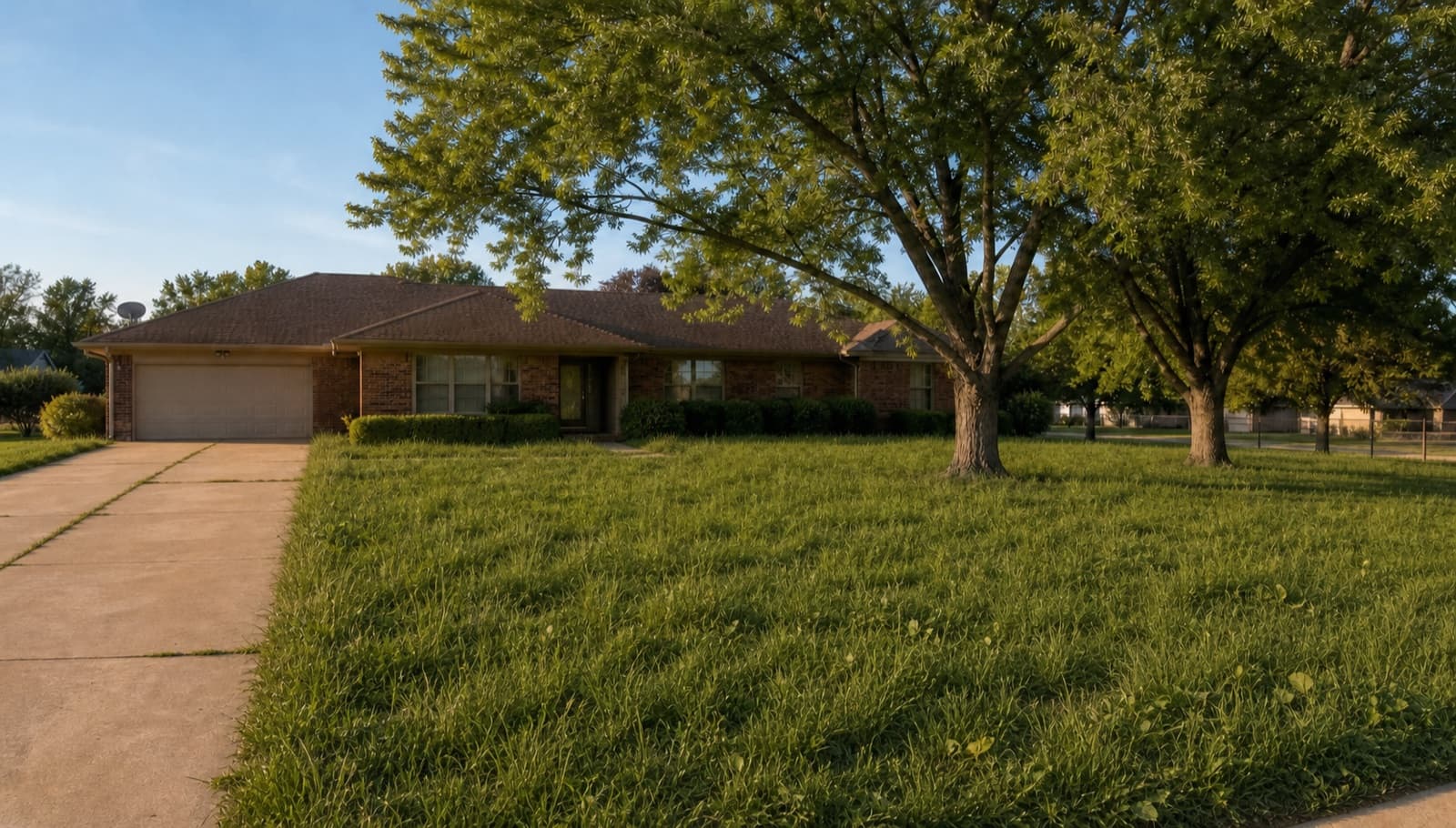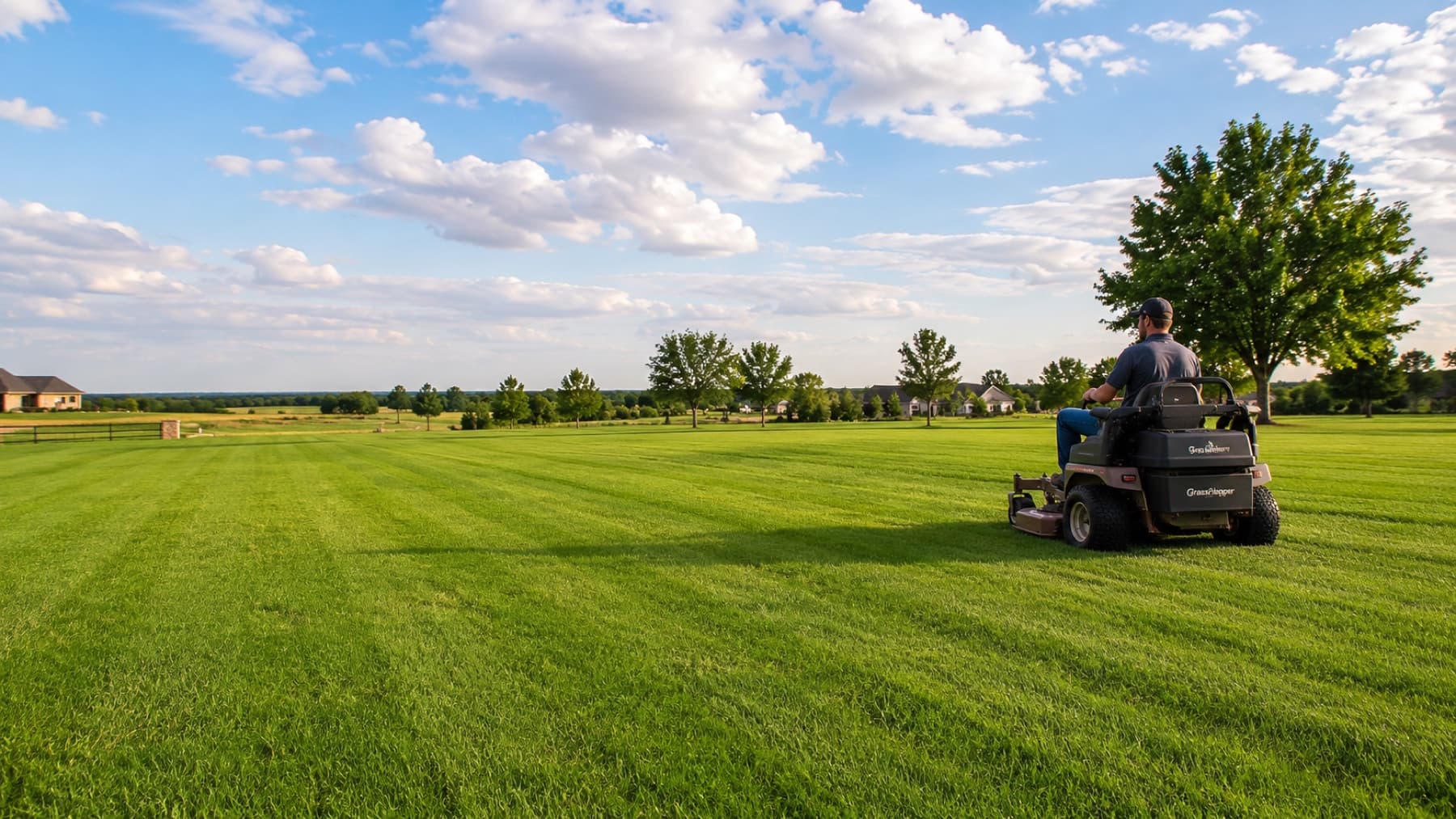
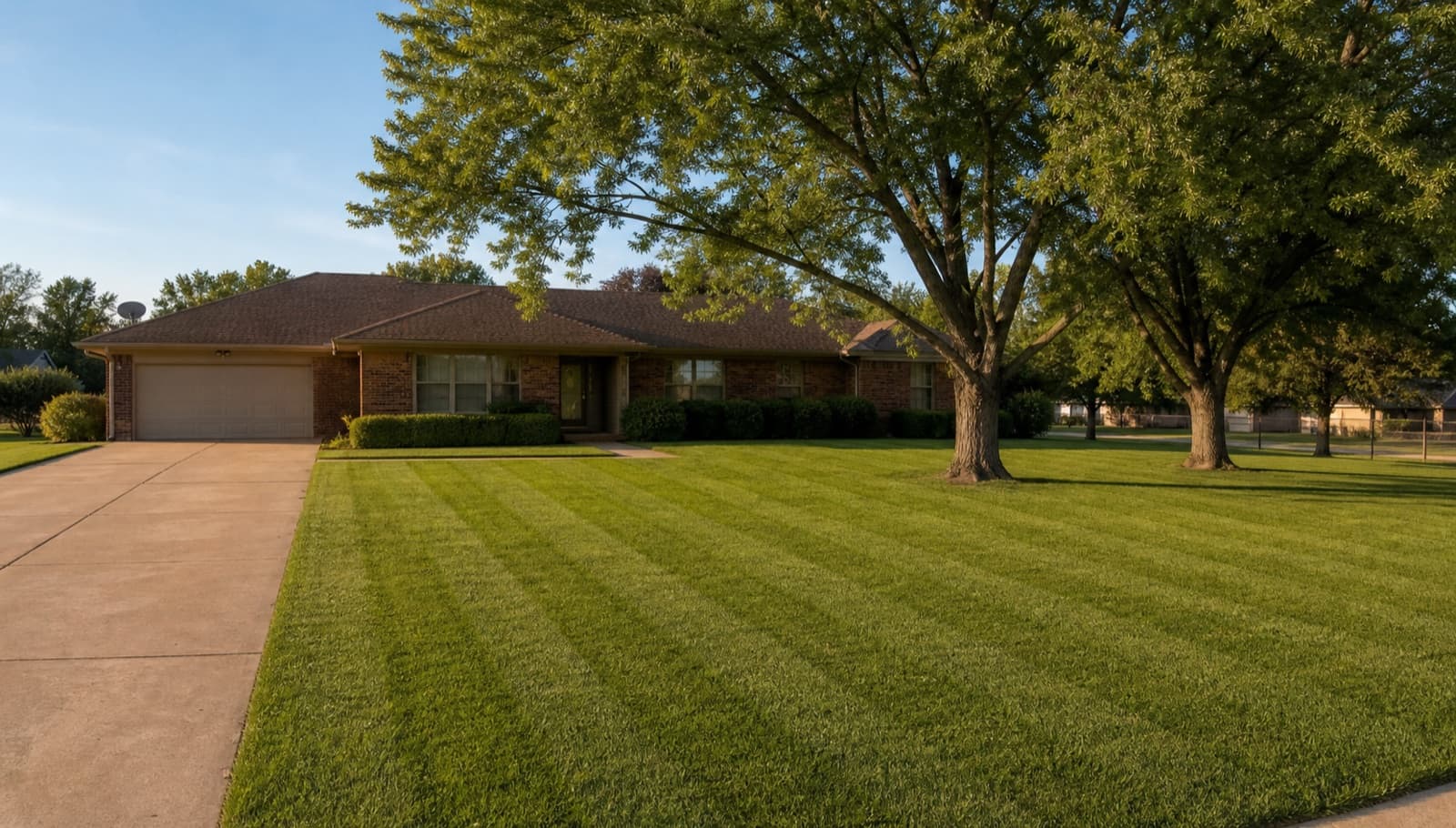
Weekly mowing is a useful baseline, not a law. A Woodward lawn may surge after spring rain, slow during a dry stretch, and pick up again when temperatures moderate. Good mowing follows growth so the lawn stays tidy without unnecessary traffic.
Use the one-third rule
Try not to remove more than about one-third of the grass blade in a single visit. If the lawn gets away from you, bring it down gradually over multiple cuts. This protects color, reduces clumping, and keeps the growing point better protected.
Watch rainfall and irrigation
Grass grows faster when moisture and temperature line up. A regularly irrigated lawn may need a tighter schedule than a non-irrigated property. After drought, do not assume growth will immediately return evenly across the whole yard.
Match the schedule to the property
Commercial entrances and highly visible front yards often need a more consistent finished appearance. Acreage, back lots, and low-use areas may follow a different interval. Dividing the property into maintenance zones can control cost while keeping the important areas sharp.
Quick checklist
Put these tips to work.
- ✓Measure growth instead of relying only on the calendar.
- ✓Avoid a low cut after missing a visit.
- ✓Keep a consistent edge along visible hard surfaces.
- ✓Adjust separate zones according to use and visibility.
How CLM can help
Local work with a clear finish.
Combs Land Management builds mowing schedules around the property, not a generic route sheet. Woodward homeowners, rentals, businesses, and acreage owners can choose recurring or single-visit service.
Get a Free QuoteCommon questions
Good to know.
Is weekly mowing always necessary?
No. Weekly service is common during active growth, but conditions and the desired finish should determine frequency.
What if the lawn is already overgrown?
A staged cut and cleanup is usually better than taking it extremely low in one pass.
For additional research-based Oklahoma guidance, visit Oklahoma State University Extension: Lawn Management in Oklahoma.